Why it matters
Pedalling is the cornerstone of cycling. It’s not just about pushing the pedals — it’s a smooth, circular motion that balances speed, power and endurance. A steady cadence (roughly 70–100 RPM) conserves energy, sustains power on climbs and keeps the bike balanced on technical trails.
▸When to teach: First weeks on the bike
The technique, step by step
01
Pedal-stroke mechanics
Think circular motion, not just pushing down.
Divide the stroke into four phases: push forward, press down, pull back, lift up.
Sit upright with a slight bend in elbows and knees, core engaged for stability.
02
Find the right cadence
Aim for a steady 70–100 RPM; younger riders often spin faster naturally.
Avoid spinning frantically in too small a gear with no forward drive.
Avoid grinding slowly up climbs in too big a gear.
03
Equipment & pedals
Platform pedals suit beginners — freedom to put a foot down.
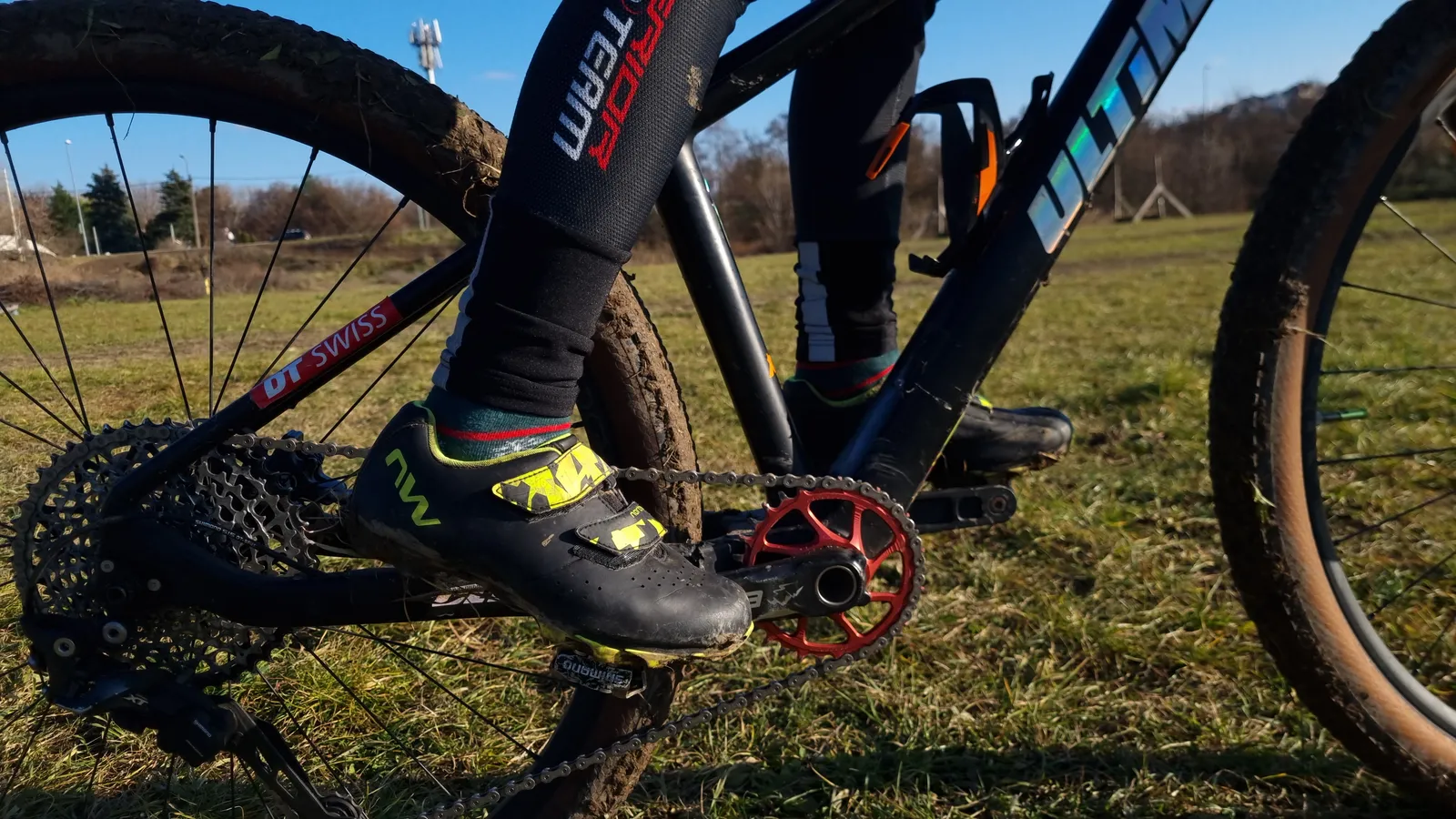
Move to SPD (clipless) pedals once training is regular, for push-and-pull efficiency.
Set saddle height so the leg extends almost fully without locking the knee.
04
Adapt to the terrain
Climbs: lower gear, steady cadence, smooth strokes for traction.
Flat: optimal cadence, shift to balance speed and effort.
Technical: focus on control and pedal timing to avoid striking obstacles.
Practice drills
Cadence count
Count pedal revolutions over 15 seconds (or use a sensor) and hold a consistent pace.
One-leg drill
Pedal with one leg resting off the pedal to find and smooth out dead spots.
Click in / click out
Practise clipping SPD pedals in and out while stationary, then on slow rides.
Common mistakes & how to fix them
✕Jerky, stomping motion
→Cue smooth circular pedalling rather than stomping down.
✕Only pushing down
→Once on SPDs, emphasise the pull-back and lift-up phases.
✕Ignoring gears
→Encourage frequent shifts to match cadence and terrain.
Signs of progress
✓Consistent cadence with minimal fluctuation
✓Smooth strokes with no obvious dead spots
✓Confident push-and-pull on SPD pedals
Parent pro insight
Switching to SPD pedals is a milestone, not a danger — they’re often more stable than platforms. Many kids riding 2–3×/week can switch at 7–8. Start stationary, normalise the learning curve, and celebrate the first technical climb clipped in.
Continue the path
Go deeper with Premium
The full lesson library adds video breakdowns, printable drill cards and a coach-style progression tracker — currently under development.